Read time: 4 mins
Author: Charlie Martin
The challenge
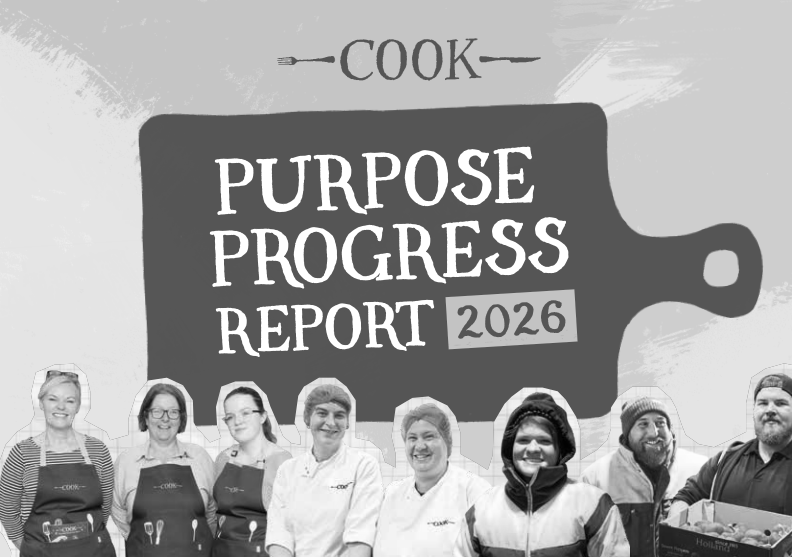
COOK’s Purpose Progress Report sets out the business’s mission to “nourish people and planet” across three core programmes: Recipes for Change, Feeding Community and RAW Talent. It covers farm-level supplier partnerships, kitchen operations, community giving and workplace culture, and is written to reach a broad audience, including customers, staff, suppliers, shareholders and independent stockists.
How do you stay engaging for a general reader while making sure the report is responsibly crafted?
That is the core tension in producing a report of this sophistication, and it is one COOK’s own team named directly when the teams met to discuss the pilot.
The review
For the pilot, truMRK carried out an independent transparency assessment of COOK’s published Purpose Progress Report 2026, examining it against three pillars: claims, language and context.
The claims pillar involves identifying every sustainability claim in the content and assessing it for substantiation.
In COOK’s report, this surfaced genuinely strong examples of substantiation, among them the Best Companies workplace rankings and the University of Oxford study behind the report’s vegetable-meal-visibility sales uplift figures, both externally checkable by any reader.
The language pillar checks every claim-bearing statement against the wording requirements of the Green Claims Code and ASA guidance. The context pillar independently establishes the sustainability issues material to a business like COOK, then checks how many of those are addressed in the content and how thoroughly.
What COOK took from the pilot
Two things stood out for COOK’s team.
The first is a case for formalising claims review earlier in the drafting process. COOK already puts a report through several rounds of internal proofing and sign-off, including senior leadership, before it is published.
What that process does not currently include is a structured, evidence-based check of each claim’s substantiation, language and context, the specific gap the pilot was able to fill.
Building that step into COOK’s existing editorial process, rather than relying on it only after publication, would give future reports a stronger footing before they go out the door.
The second is a structural idea for how COOK presents its evidence. COOK’s Impact Director, Andy Stephens, saw the value of having an anchor document sitting behind the report itself:
“I was wondering whether there’s a way of having an anchor document where you’ve got all your claims and all the detail, and then in your comms you’ve got this central point of reference.”
It is a structure close to what Anti-Greenwash Charter signatories such as Naked Paper already maintain through their Green Claims Policy, holding the full detail behind every claim so that a published report can stay focused and readable while a fuller evidence base sits just behind it for anyone who wants to go further.
On the broader question of third-party recognition, John Wordsworth was direct:
“Broadly speaking, third-party accreditation is a positive thing.”
Andy Stephens linked the same point to trust, seeing genuine long-term value in a process that builds customer confidence and brand loyalty over time, rather than one that functions as an annual box-ticking exercise.
Why it matters
The pilot demonstrated the practical shift truMRK is designed to make possible:
Adding a structured, evidence-based substantiation check into an existing editorial process, earlier than a broader post-publication review would normally allow.
COOK’s engagement with the pilot, and the ideas it prompted around structuring evidence and claims, illustrate the kind of proportionate, collaborative value truMRK is built to add for purpose-led brands managing a wide and detailed reporting remit.
Strengthen Your Communications
truMRK independently reviews sustainability reports and communications, helping organisations publish with clarity and confidence.