Greenwashing Enforcement in 2025 and What It Means for 2026

16.1.2026

Greenwashing Enforcement in 2025 and What It Means for 2026

The enforcement activity of 2025 showed that getting sustainability claims wrong is no longer just a communications risk, but a regulatory one that organisations must actively manage in 2026.

Read time: 6 mins
Author: Charlie Martin

 Read more articles

By the end of 2025, sustainability communications were no longer treated as a peripheral brand issue. Across the UK, EU, and other major markets, environmental and social claims were increasingly handled as consumer-facing representations that must be accurate, specific, and provable.

What changed most in 2025 was not the existence of rules, many of which had been in place for years, but the confidence and willingness of regulators to enforce them publicly.

When claims failed, the response was increasingly formal, documented, and consequential.

This article reviews what enforcement in 2025 actually looked like, why it mattered for organisations publishing sustainability content, and what to expect as scrutiny intensifies further in 2026.


2025 in review: when sustainability language became enforceable


From guidance to action

For several years, regulators had warned organisations about vague and exaggerated environmental claims. In 2025, those warnings translated into action.

Regulators repeatedly emphasised that the problem was not companies talking about sustainability, but companies saying more than they could substantiate.

As one UK regulator put it, environmental claims must be “truthful, accurate, and capable of being substantiated”, and must not “omit or hide material information”.

This focus on what consumers reasonably understand, rather than what companies intend, shaped many 2025 decisions.


Key patterns behind 2025 greenwashing cases


1. Vague claims without boundaries

One of the most common failings in 2025 was the use of broad, positive environmental language without defining its limits.

Claims such as “sustainable materials”, “eco-conscious collections”, or “better for the planet” were repeatedly challenged where companies could not clearly explain:

  • Which impacts were being reduced

  • Compared to what baseline

  • Across which part of the product lifecycle

Regulators made it clear that feel-good language does not reduce the need for evidence. In several rulings, they stressed that the overall impression created by headlines, imagery, and tone mattered as much as footnotes.


2. Targets presented as achievement

Another recurring issue was the treatment of future commitments as if they reflected current performance.

Examples included:

  • Net zero targets referenced without a delivery plan

  • Emissions reduction goals presented without interim progress data

  • Long-term ambitions used as marketing proof points

Regulators consistently stated that ambition must be clearly labelled as ambition. Where this distinction was blurred, claims were judged misleading even if the underlying target was genuine.


3. Selective disclosure and omission

A number of 2025 cases focused not on false statements, but on what was left out.

Claims highlighting recycled content, ethical sourcing, or low-impact initiatives were challenged where companies failed to disclose material trade-offs or wider impacts. Regulators increasingly framed this as a problem of omission, rather than exaggeration.

The message was clear. Partial truth can still mislead if it creates an unbalanced picture.


High-profile enforcement examples from 2025


Consumer goods and fashion

Fashion and ultra-fast retail continued to attract attention in 2025 due to the volume of claims, frequency of purchases, and sensitivity of environmental impacts.

In France, regulators imposed a €40 million fine on Shein, citing deceptive commercial practices.

Public reporting highlighted concerns around sustainability messaging that created an impression of responsibility not supported by the company’s overall business model.

In Italy, a separate €1 million fine was issued against the same company for environmental claims described by the regulator as vague and potentially misleading by omission.

These cases reinforced a key point. High-volume, low-cost business models face heightened scrutiny when using sustainability language, particularly where claims appear to soften or distract from known impacts.


Financial services and investment products

In 2025, ESG claims in financial services were treated increasingly as statements of fact, not branding language.

In Germany, asset manager DWS agreed to pay a €25 million fine following a greenwashing investigation into how ESG considerations were described and applied.

Elsewhere, courts and regulators made it clear that statements about exclusions, screening, or sustainable investment strategies must align precisely with portfolio reality.

Describing a fund as avoiding certain activities, while holding exposure through complex structures, was repeatedly criticised.

As one regulator noted, “ESG representations must reflect how investment decisions are actually made, not how they are marketed”.


Advertising and consumer-facing campaigns

Advertising regulators continued to focus on the overall impression created by campaigns.

In the UK, Advertising Standards Authority upheld multiple complaints against travel and transport advertising that implied environmental benefits without adequate substantiation.

In several rulings, the regulator stated that consumers were likely to interpret claims as applying to the whole service, not just a limited aspect.

These cases highlighted a recurring problem. Even where individual statements are technically defensible, the combined effect of imagery, headlines, and tone can still mislead.


The UK shift that changed risk calculations

One of the most important developments in 2025 was structural rather than case-specific.

The UK’s competition and consumer regime moved towards more direct enforcement, enabling Competition and Markets Authority to impose penalties without relying solely on lengthy court processes.

This significantly altered risk for organisations publishing environmental claims.

Sustainability content is now far more likely to be treated as regulated consumer information, with financial consequences attached.

For many organisations, this prompted a reassessment of how sustainability claims are reviewed, approved, and evidenced internally.


The wider impact of 2025 enforcement


Rising scepticism and reduced tolerance

As enforcement activity became more visible, stakeholder expectations shifted quickly.

Journalists, NGOs, investors, and consumers became more confident in challenging claims.

In some sectors, even well-intentioned messaging was met with scepticism unless accompanied by clear explanation and accessible evidence.

Several companies found themselves revising published content, not because claims were false, but because they were too open to interpretation.


Sustainability communications moved closer to legal oversight

In 2025, many organisations changed how sustainability content was governed. Common changes included:

  • Treating environmental claims as disclosures rather than marketing copy

  • Involving legal and compliance teams earlier in the drafting process

  • Building internal evidence packs that could withstand external scrutiny

This shift reflected a growing recognition that sustainability communications now carry regulatory and reputational risk comparable to financial or product claims.


What changes again in 2026


1. Faster challenges and earlier intervention

In 2026, organisations should expect challenges to arise more quickly.

Regulators are increasingly willing to intervene at the campaign or webpage level, rather than waiting for systemic issues to emerge.

There is also less tolerance for the argument that consumers “should understand” marketing language. The benchmark is what a reasonable person is likely to take away from the claim.


2. EU anti-greenwashing rules come into force

The EU’s work to strengthen consumer protection around environmental claims becomes operational in late 2026.

New requirements will tighten expectations around substantiation, clarity, and presentation.

For organisations operating across borders, this increases the importance of consistency and precision. Claims that vary subtly between markets may attract scrutiny if they appear to exploit regulatory gaps.


3. Repeat scrutiny of high-risk sectors

Based on 2025 patterns, sustained attention in 2026 is likely in:

  • Fashion and consumer goods with high product turnover

  • Travel, aviation, and transport

  • Financial services and ESG-labelled products

These sectors combine high consumer sensitivity with complex impact profiles, making them a continued enforcement priority.


4. Evidence readiness becomes essential

In 2026, many problems will arise not from intentional misstatement, but from misalignment between:

  • Public claims

  • Internal data

  • Supplier information

  • Outdated assumptions or baselines

Organisations that cannot quickly produce clear, current evidence may find themselves exposed even where intent was responsible.


A practical publishing test for 2026

Before publishing sustainability claims, organisations should be able to answer, clearly and confidently:

  • What exactly are we claiming, and about what scope?

  • Is this a statement of fact, a comparison, or an ambition?

  • What evidence supports it, and is that evidence current?

  • What might a non-expert reasonably infer from this wording?

  • What information could materially change a reader’s understanding if it were omitted?

If these questions are difficult to answer internally, the risk of challenge is already high.


Where truMRK supports communication

truMRK reviews draft sustainability communications before publication, checking the underlying evidence, assessing the clarity of language, and identifying where claims may overreach or mislead.

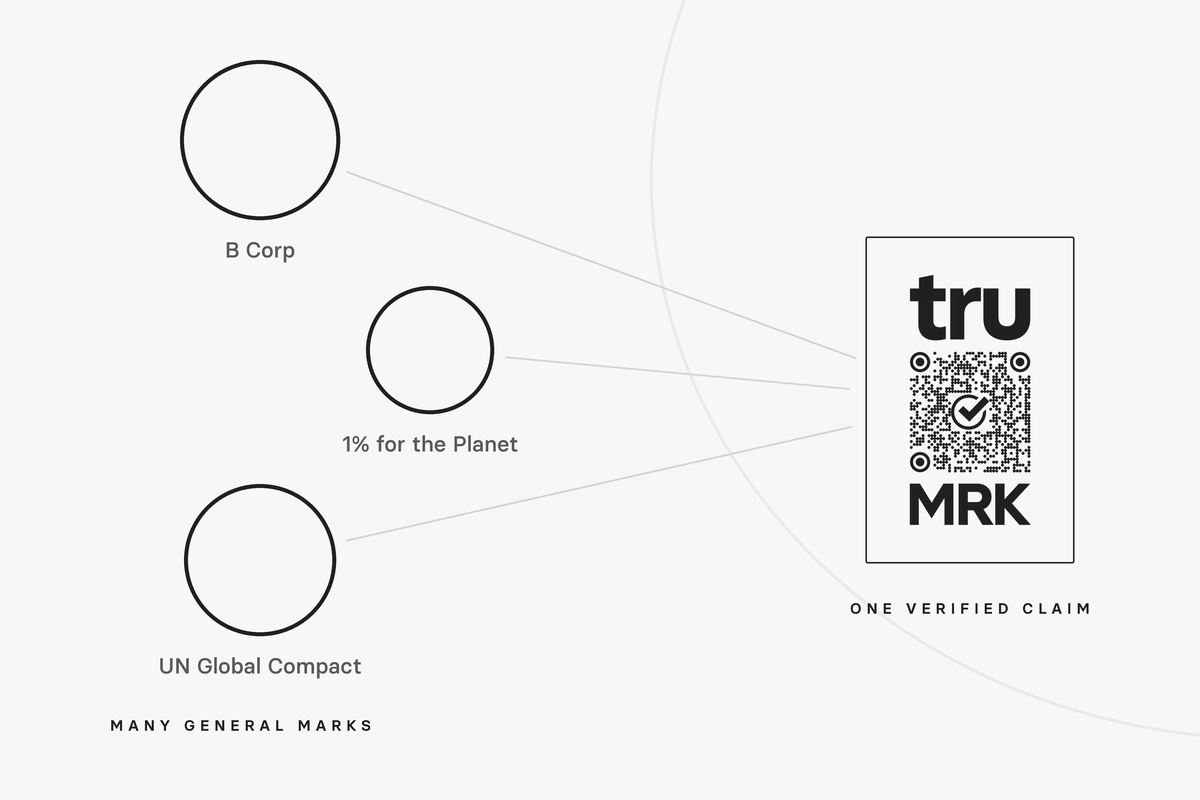
Where verification is complete, truMRK offers the option to publish a public Transparency Report linked to a verified badge. This allows stakeholders to understand what was reviewed, what evidence was relied on, and where limitations exist.

In an environment shaped by 2025 enforcement and 2026 expectations, this approach supports organisations that want to communicate sustainability progress clearly, cautiously, and credibly, without overstating impact or inviting avoidable risk.

Concerned about greenwashing risk?


truMRK independently reviews sustainability claims and supporting evidence, helping organisations publish with clarity, context, and confidence.

Learn how truMRK works

Strengthening Sustainability Reporting Through Independent Transparency

13.1.2026

Strengthening Sustainability Reporting Through Independent Transparency

Karndean Designflooring used truMRK’s independent review to benchmark and strengthen its sustainability reporting, improving clarity, transparency, and confidence in its communications.

Read time: 2 mins
Author: Charlie Martin

 Read more articles

The challenge

As expectations around sustainability reporting continue to increase, from regulators, customers, and wider stakeholders, Karndean Designflooring recognised the importance of ensuring its communications were not only accurate, but also clear, balanced, and credible.

With a public commitment to responsible communication through The Anti Greenwash Charter, the organisation wanted an independent, objective view of how its sustainability reporting performed in practice. The aim was to understand where its approach was strong, where greater clarity or context was needed, and how future reporting could better meet stakeholder needs.


Why truMRK

Karndean engaged truMRK to independently review its sustainability communications and issue a Transparency Report. The purpose was not endorsement or certification, but benchmarking: providing a clear, evidence-led assessment of claims, language, and supporting information.

truMRK’s role was to assess how sustainability statements were framed, how well they were substantiated, and where there was a risk of misinterpretation. This included reviewing alignment with recognised standards, the balance between ambition and evidence, and the clarity of performance disclosures.

The approach

Karndean used the independent Transparency Report as a benchmarking exercise after the publication of its 2024 Evolve Sustainability Report. The assessment provided an unfiltered external perspective, enabling the team to step outside internal assumptions and view their reporting as stakeholders would.

The review highlighted both strengths and gaps, offering practical insight into:

  • The clarity and precision of sustainability language

  • Where additional context would improve understanding

  • How data and performance information could be more specific

  • How effectively the report addressed different stakeholder audiences

Rather than focusing solely on compliance, the process supported learning and improvement, helping the team understand what good and better transparency looks like in practice.


The outcome

The assessment confirmed that Karndean’s reporting already demonstrated strong foundations, particularly in clear language and commitment to recognised standards. It also identified areas where deeper explanation, clearer data presentation, and more detailed performance information would strengthen credibility.

Importantly, the process challenged the organisation to think more critically about audience needs and how future reports could communicate sustainability information more clearly and confidently. The insights gained have already shaped internal thinking and planning for subsequent reporting cycles.


What Karndean said

“Working with truMRK has been a highly valuable step in strengthening the way we communicate our sustainability work and to build on our commitment through the Anti Greenwash Charter. We used their independent Transparency Report as a benchmarking exercise for our 2024 Evolve Sustainability Report. This gave us a clear, unfiltered view of the strengths in our approach, such as the clarity of our language and our commitment to recognised standards, as well as where we need to provide deeper context, clearer data, and more specific performance information for our stakeholder. And it has challenged us to think about our audience for future reports.

Jamie Shaw, Global Head of Sustainability


Looking ahead

Following the initial Transparency Report, Karndean is now developing its next sustainability report in partnership with truMRK, embedding independent review earlier in the process. This reflects a longer-term, risk-aware approach to sustainability communication, supporting confidence at the point of publication and helping ensure claims are clear, substantiated, and credible.

Concerned about greenwashing risk?


truMRK independently reviews sustainability claims and supporting evidence, helping organisations publish with clarity, context, and confidence.

Learn how truMRK works

Why Sustainability Advertising Needs a Better Standard

11.1.2026

When 30 Characters Decide Your Reputation: Why Sustainability Advertising Needs a Better Standard

Why sustainability claims are being judged by ad formats rather than evidence, and how transparency restores balance.

Read time: 3 mins
Author: Charlie Martin

 Read more articles

Labelling a brand as “greenwashing” because it failed to explain the nuance of its sustainability work in a 30-character Google Ad is, frankly, wild.

Yet that is effectively the precedent being set by recent advertising rulings. Not because brands were inventing claims or misleading consumers, but because the evidence did not sit inside the ad itself.

This matters. Not just for marketing teams, but for sustainability leaders, legal teams, and anyone responsible for publishing claims in 2026 and beyond.


The problem is not false claims. It is the format.

In recent rulings involving Nike, Lacoste, and Superdry, the core issue was not a lack of evidence.

These brands had the receipts. They had the data. They could substantiate their claims.

The problem was where that substantiation lived.

Under current enforcement logic, particularly as applied by the Advertising Standards Authority, if proof is not presented within the ad itself, the claim may still be treated as misleading. This is true even when ads are delivered dynamically, character limits prevent meaningful explanation, and advertisers do not control placement or surrounding context.

In short, context does not count unless it fits inside the ad unit.


Why this standard breaks down in digital advertising

Digital advertising was never designed for nuance.

Search ads, social placements, and programmatic formats prioritise brevity, automation, and speed. They do not prioritise layered explanation. Sustainability claims, by contrast, require scope, boundaries, definitions, and acknowledgement of trade-offs.

Trying to compress that into a headline or short line of copy is not just unrealistic. It actively discourages responsible communication.

This problem intensifies when AI-driven monitoring systems flag terms such as “green”, “eco”, or “sustainable” without understanding intent, qualification, or evidence.


The chilling effect on sustainability communication

The result is a growing fear across organisations.

Say too little, and progress goes unrecognised. Say too much, and invite scrutiny. Say anything at all, and risk being accused of greenwashing.

This does not improve accountability. It suppresses transparency.

Increasingly, sustainability teams advise marketing colleagues to avoid sustainability language altogether. Not because the work is not real, but because the rules reward silence over clarity.

That is a failure of the system.


Accountability should not depend on ad character limits

Holding brands to account matters. Consumers deserve clarity, honesty, and evidence. But accountability should be based on whether a claim can be substantiated, not whether it was fully explained inside a format never designed for depth.

A more credible standard would ask:

  • Is the claim supported by verifiable evidence?

  • Is that evidence publicly accessible?

  • Is the language proportionate, specific, and not overstated?

  • Is additional context clearly signposted?

This is where current enforcement falls short.


Transparency Reports as the missing layer

Rather than forcing every claim to stand alone, Transparency Reports offer a practical countermeasure.

They provide a public, claim-specific explanation of evidence, scope, and limitations. They define what terms such as “sustainable” actually mean in practice. They disclose what the claim does not cover. They remain available long after an ad campaign ends.

Most importantly, they allow brands to link from constrained formats, such as ads, to fuller context without diluting creative or resorting to vague language.


Liberating creative without lowering standards

When brands have a credible, independent way to show their working, they gain permission to communicate responsibly.

They can use sustainability language without fear. They can explain progress without oversimplification.

They can reduce legal and reputational risk. They can give regulators and consumers what they actually need, which is context.

This is not about finding loopholes. It is about aligning accountability with how digital communication actually works.


What this signals for 2026 and beyond

As scrutiny increases and automated monitoring becomes more aggressive, the brands that succeed will not be the quietest. They will be the clearest.

That means moving beyond ad-level compliance towards publication-level transparency.

If the goal is to reduce greenwashing, the answer is not fewer claims. It is better-supported ones.

At truMRK, this is the gap we exist to address. We review draft sustainability communications, assess evidence and language risk, and issue public Transparency Reports that give claims the context ads never can.

Because credibility should not depend on how many characters you are allowed to use.

Concerned about greenwashing risk?


truMRK independently reviews sustainability claims and supporting evidence, helping organisations publish with clarity, context, and confidence.

Learn how truMRK works